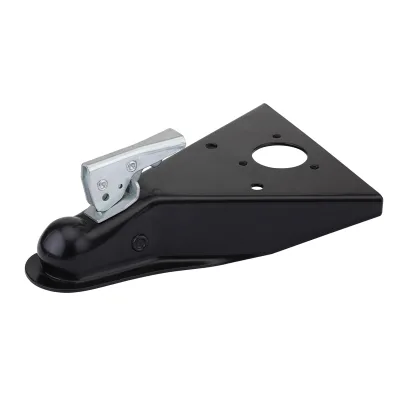
Source trailer coupler with bracket and keel roller for RV, Boat, Camper
Compare 13 listings for trailer coupler with bracket and keel roller from Qingdao and Zhejiang suppliers. Options include galvanized steel and iron finishes with ISO certifications for towing RVs, boats, and campers.
Key considerations
Products List




Comprehensive Sourcing Guide
Strategic Sourcing Guide for Trailer Couplers with Brackets and Keel Rollers
Understanding the Technical Architecture of Trailer Coupler Assemblies
When sourcing a trailer coupler with an integrated bracket and keel roller, buyers must first distinguish between the primary towing interface and the support mechanisms that ensure stability during transport. The core component, the trailer coupler, serves as the connection point between the towing vehicle and the trailer frame. In the observed market data, these units frequently appear with specific hitch class ratings, such as Class 3, which indicates a capacity for heavier loads. The structural integrity of the coupler is paramount, with materials ranging from high-grade steel to iron, often subjected to heavy-duty classifications. The physical dimensions are equally critical; specifications often cite a 2-inch ball mount size, which is the industry standard for medium-to-heavy duty towing applications.
Complementing the coupler is the keel roller system, a specialized component designed to support the hull of a boat during loading and unloading. The keel roller is not merely a passive wheel but a critical load-bearing element that prevents hull damage. Market observations indicate that these rollers are available in specific diameters, including 8-inch, 10-inch, and 12-inch variants. The selection of the correct diameter depends on the width and weight of the vessel being transported. The bracket that holds the keel roller must be engineered to withstand dynamic forces, often utilizing a stamping or machining process to achieve the necessary strength. The finish of these components is typically a zinc coat or galvanized treatment, providing a barrier against corrosion in marine environments. Buyers should verify that the bracket design aligns with the specific keel roller size to ensure a secure fit, as mismatched components can lead to structural failure during transit.
Compliance Verification and Certification Standards
Navigating the regulatory landscape for trailer parts requires a rigorous verification of certifications and standards. The supply chain for these components often references multiple international and regional standards. In the observed product listings, certifications such as ISO, CCC, CE, and DOT appear frequently. The presence of ISO certification suggests adherence to quality management systems, while DOT compliance is often a prerequisite for parts intended for road use in North America. Additionally, specific automotive standards like ISO/TS16949 indicate that the manufacturing process meets the rigorous requirements of the automotive industry, which is a strong indicator of process control and reliability.
However, buyers must exercise caution when interpreting these certifications. The presence of a certification label does not automatically guarantee that every unit in a batch meets the standard; rather, it indicates that the supplier's facility is certified. For the trailer coupler and keel roller bracket, the specific standard "Boat Trailer Keel Roller Bracket" is noted as a relevant product standard. This implies that the design and manufacturing of the bracket must conform to specific dimensional and load-bearing criteria associated with boat trailers. Furthermore, the condition of the parts is consistently listed as "New," which is a baseline expectation for B2B procurement. Buyers should request current certification documents from the supplier to verify that the specific batch of goods being purchased is covered under the stated certifications. The absence of an ABS (Anti-lock Braking System) in these specific trailer parts is a notable observation, as these components are typically passive mechanical assemblies rather than active braking systems.
Cost Drivers and Economic Factors in Procurement
The pricing structure for trailer couplers with brackets and keel rollers is influenced by a complex interplay of material costs, manufacturing processes, and order volume. The observed price range for these items spans from 1 to 50 USD, a wide variance that reflects differences in material quality, finish, and customization levels. The primary cost driver is the raw material; products listed as "Heavy Duty" or made from specific grades of steel will command a higher price point than those made from standard iron. The surface treatment process also significantly impacts cost. Galvanization and zinc plating are more expensive than standard powder coating but offer superior longevity, particularly for boat trailers exposed to saltwater.
Order volume plays a decisive role in the final unit cost. The Minimum Order Quantity (MOQ) for these components varies widely, ranging from 50 pieces to 800 pieces. Suppliers with lower MOQs, such as 50 PCS, may charge a premium per unit due to the setup costs associated with smaller production runs. Conversely, buyers ordering at the higher end of the range, such as 500 or 800 units, may benefit from economies of scale. The packaging method is another cost factor; options like stretch film, brown cartons, or custom wooden boxes add to the overall expense. Customization is available for many suppliers, allowing buyers to specify dimensions or finishes, but this often incurs additional tooling or setup fees. Buyers should calculate the total landed cost, including shipping and potential customs duties, rather than focusing solely on the unit price, as the low-end price range may not reflect the cost of high-specification, certified units.
Typical Applications and Load Capacity Requirements
The application of trailer couplers with brackets and keel rollers is primarily focused on the transportation of boats, campers, and recreational vehicles (RVs). The "Byword" associated with these products often includes terms like "Boat Parts," "Trailer Parts," and "Trailer Coupler," highlighting their specialized use. The load capacity is a critical specification that determines the suitability of the component for a specific application. Observed data indicates a maximum payload capacity of 5000 lbs for many units, while others are rated for 3500 lbs. This variation means that a single product line may not be suitable for all trailer types.
For boat trailers, the keel roller is essential for supporting the centerline of the hull. The bracket must be robust enough to handle the dynamic loads generated when the boat is launched or retrieved. The axle configuration is another application factor; many of these trailer assemblies are designed for single-axle trailers, indicated by an axle number of 1 and a tire number of 2. This configuration is common for smaller to medium-sized boats. The purpose of these parts is often for replacement or repair, suggesting that buyers may be sourcing components to maintain existing fleets or to retrofit older trailers. The "Full Trailer" type classification further defines the scope of use, distinguishing these components from semi-trailers or gooseneck configurations. Buyers must ensure that the payload rating of the coupler and bracket matches or exceeds the gross vehicle weight rating (GVWR) of the trailer to prevent catastrophic failure.
Supplier Evaluation and Geographic Considerations
Evaluating suppliers for trailer couplers and keel rollers requires a focus on geographic origin, production capabilities, and after-sales support. The primary production locations identified in the market data are Qingdao, China, and Zhejiang, China. These regions are known for their robust manufacturing infrastructure and specialization in metalworking and automotive parts. The proximity of these suppliers to major shipping ports can influence lead times and logistics costs. When evaluating a supplier, buyers should verify the "prod_origin" and "place_of_origin" to ensure consistency in the supply chain.
The manufacturing process is a key differentiator among suppliers. Some suppliers utilize stamping processes, which are efficient for high-volume production of brackets, while others employ machining for more precise or custom components. The ability to offer customization is a significant advantage, allowing buyers to tailor the product to specific trailer designs. After-sales service is another critical factor; suppliers offering "Online" support or "Ok" service levels provide a safety net for buyers in case of defects or installation issues. The warranty period, often cited as 1 Year, is a standard metric for supplier confidence. Buyers should prioritize suppliers who provide clear documentation of their manufacturing processes and offer transparent communication channels for technical inquiries.
Quality Control and Long-Term Procurement Strategy
Ensuring the quality of trailer couplers and keel rollers is essential for safety and longevity. Quality control measures should include verification of the surface treatment, such as the thickness of the zinc coat or the quality of the galvanized layer. The color of the finished product, often white or silver, can also serve as an indicator of the coating quality, though this is secondary to the corrosion resistance properties. The packaging method, whether it be carton, wooden box, or custom requirements, plays a role in protecting the components during transit.
For long-term procurement, buyers should establish a relationship with suppliers who demonstrate consistency in their product standards. The "As your request" standard indicates a flexible manufacturing approach, but buyers must provide detailed specifications to ensure the final product meets their needs. Regular audits of the supplier's quality control processes can help mitigate risks associated with batch variations. Additionally, buyers should consider the availability of spare parts and the ease of replacement. Since these components are often used for repair purposes, a reliable supply chain for future orders is crucial. By focusing on suppliers with proven track records in ISO and other relevant certifications, buyers can ensure that their procurement strategy supports the safety and reliability of their trailer fleets over the long term.
Comparative Analysis of Component Specifications
To facilitate decision-making, the following table summarizes the key specifications observed in the market for trailer couplers with brackets and keel rollers. This comparison highlights the variance in materials, capacities, and certifications that buyers must consider.
| Specification Category | Observed Range / Options | Key Considerations for Buyers |
|---|---|---|
| Material | Steel, Iron | Verify grade (e.g., Heavy Duty) for load requirements. |
| Hitch Class | Class 3 | Ensure compatibility with towing vehicle and trailer tongue. |
| Keel Roller Size | 8", 10", 12" | Match roller diameter to boat hull width and weight. |
| Max Payload | 3500 lbs, 5000 lbs | Must exceed trailer GVWR for safety margin. |
| Surface Treatment | Galvanized, Zinc Coat, Powder Coat | Galvanized preferred for marine/boat environments. |
| Certifications | ISO, CCC, CE, DOT, ISO/TS16949 | Verify current validity and scope of certification. |
| MOQ | 50 PCS to 800 PCS | Balance inventory costs with unit price discounts. |
| Origin | Qingdao, Zhejiang, China | Assess logistics and lead time implications. |
| Condition | New | Standard expectation; verify packaging for damage. |
| Warranty | 1 Year | Standard term; clarify claim procedures. |
This table serves as a reference point for buyers to compare potential suppliers and ensure that the selected components meet the specific technical and operational requirements of their trailer applications. By systematically evaluating these factors, buyers can make informed decisions that balance cost, quality, and performance.
FAQs
What materials are used for trailer couplers with bracket and keel roller?
These components are primarily constructed from steel or iron, often classified as heavy duty. The specific material grade depends on the required load capacity, with options ranging from standard iron to high-grade steel for durability.
Which keel roller sizes are available for boat trailer applications?
The keel rollers are available in 8-inch, 10-inch, and 12-inch diameters. Buyers must select the correct size to match the hull width and weight of the vessel being transported to ensure proper support.
Can I find trailer couplers with ISO and DOT certifications?
Yes, certified units are available with ISO, CCC, CE, and DOT compliance. These certifications indicate adherence to quality management systems and road safety standards, though buyers should verify specific batch documentation.
What is the maximum payload capacity for these trailer parts?
Observed maximum payload capacities range from 3500 lbs to 5000 lbs. The specific capacity depends on the model and material grade, so users must match the rating to their trailer's gross vehicle weight.
How are these trailer parts typically packaged for shipping?
Packaging options include stretch film, brown cartons, or custom wooden boxes. The specific packaging method may vary by supplier and can be customized to meet customer requirements for protection during transit.
What surface treatments protect these components from corrosion?
Common surface treatments include galvanization, zinc coating, and silver powder coating. Galvanized finishes are particularly recommended for marine environments to provide superior resistance against saltwater corrosion and rust.
Which manufacturers offer customization for trailer coupler brackets?
Many suppliers offer customization for dimensions, finishes, and packaging requirements. Buyers can request specific standards or designs, though this may involve additional tooling fees and depends on the supplier's production capabilities.